Author: Tom Brennan

  • How to Read Days on Market and Explain It to Clients (Market Updates)

    How to Read Days on Market and Explain It to Clients (Market Updates)

    How to Read Days on Market and Explain It to Clients

    For real estate agents, understanding the concept of days on market (DOM) is crucial for closing deals and managing client expectations. A listing’s DOM significantly impacts perceptions and negotiation leverage. It’s a key metric influencing buyer and seller decisions. This article breaks down the meaning of DOM and provides tips on how to communicate it effectively to your clients.

    What is Days on Market?

    Definition

    Days on market (DOM) represents the number of days a property has actively been listed for sale on the market. The clock starts when a listing goes live on the MLS and stops when an accepted offer is received. It’s a readily available piece of information used by buyers, sellers, and agents.

    Example

    Imagine a bungalow in Denver, Colorado, listed on July 15, 2026. As of October 30, 2026, it’s been on the market for 108 days, meaning its DOM is 108. This calculation has implications, especially when factoring in seasonal trends or economic conditions. A longer DOM might signal adjustments to pricing or marketing.

    Importance

    Understanding DOM is a crucial tool for managing client expectations. A seller might be anxious about a property sitting on the market longer than anticipated. A clear explanation, perhaps a slowdown in buyer activity or a slightly high asking price, can ease their concerns. Monitoring DOM trends also provides insights into marketing campaign effectiveness. For buyers, DOM can highlight properties ripe for negotiation.

    How to Explain Days on Market to Clients

    Simple Explanation

    When explaining DOM to a client, keep it simple: “It’s how long your home has been available for sale.” Frame it as a measure of buyer interest. A lower DOM generally indicates higher interest, while a higher DOM might suggest re-evaluating the listing’s presentation or price. For example, you might say, “Right now, the average DOM in this neighborhood is 45 days, and your property has been on the market for 60. Let’s explore some ways to attract more buyer attention.”

    agent meeting

    Photo by Quixess Social

    Comparing to Sale Price

    Comparing DOM to the final sale price demonstrates your value. If a property initially had a higher DOM but sold close to asking, it illustrates your ability to navigate challenges. Conversely, if a property with a short DOM sold significantly below asking, it might indicate an overestimation of value. This comparison builds trust and reinforces your expertise.

    Analyzing Trends

    Analyzing broader market trends related to DOM is essential. Explain that DOM fluctuates based on seasonality, interest rates, and economic conditions. Being able to contextualize a property’s DOM within these trends demonstrates understanding and builds credibility. If a client expresses concern about a longer DOM, explain that it’s consistent with market patterns and you’re actively working to attract buyers.

    Using Data to Inform Days on Market Strategy

    Analyzing DOM isn’t just about tracking a number; it’s about understanding a narrative about a local market. Real estate agents operate within a complex ecosystem influenced by economic factors and buyer preferences. A rigid approach to pricing or marketing that ignores these currents will likely result in longer DOM.

    smartphone displaying stock market data

    Analyzing market trends requires a multifaceted approach. Start with broad economic indicators, mortgage rates, unemployment figures, inflation rates, as these directly impact buyer affordability. Comparing your listings’ DOM to those of comparable properties is crucial for identifying areas for improvement. If a listing sits significantly longer than similar homes, adjustments are needed.

    Adjusting the pricing strategy is often the most impactful lever to control DOM. A strategic price reduction can generate renewed interest. A “relist” strategy can create a sense of urgency. Price adjustments should always be data-driven. Offering incentives, such as paying for closing costs, can also make a property more attractive.

    Best Practices for Agents

    Regular market updates are a cornerstone of client relationship management. Buyers and sellers appreciate transparency and informed guidance. Sharing this information proactively builds trust and positions the agent as a knowledgeable resource.

    agent training

    Photo by Quixess Social

    Effective client communication is paramount when dealing with longer DOM. Acknowledge the situation, explain the underlying factors, and outline the steps being taken to improve the listing’s visibility and appeal. Open and honest communication can prevent frustration and maintain a positive working relationship.

    Data-driven decision making separates successful agents. Track key performance indicators (KPIs) such as listing views, showing feedback, and website traffic. Analyze this data to identify patterns and trends that inform marketing strategies.

    Conclusion

    Understanding and effectively communicating Days on Market is a vital skill for real estate agents. By analyzing trends, comparing listings, and adjusting strategies, agents can proactively address challenges and keep properties moving. Remember, data-driven decision making is key to staying ahead and building trust with clients. Stay tuned for more articles on real estate marketing and agent insights.


    Disclaimer

    This article is general information, not financial or investment advice. It is not a recommendation to buy or sell anything. Talk to a licensed financial adviser before you make a decision.


  • Turning Open House Visitors Into Clients: The 48-Hour Follow-Up Plan (Lead Generation)

    Turning Open House Visitors Into Clients: The 48-Hour Follow-Up Plan (Lead Generation)

    Turning Open House Visitors Into Clients: Leveraging AI-Powered Real Estate Marketing

    The open house phenomenon is a staple of the real estate industry. However, with many potential buyers and sellers vying for attention, it can be challenging for agents to convert visitors into clients. The rise of artificial intelligence offers a powerful solution. This article explores how AI-powered real estate marketing can help you turn open house visitors into clients and boost your bottom line.

    The Power of AI in Real Estate Marketing

    How AI Can Help with Listing Photos

    The visual appeal of a listing is paramount. Buyers often make snap judgments based on photos. AI-powered tools enhance existing photos, correcting lighting, color balance, and perspective. Some platforms offer virtual staging, digitally furnishing vacant properties. This is valuable for properties difficult to stage or with tight budgets.

    AI can also analyze photos to identify issues that might deter buyers, like clutter or outdated décor. This feedback helps agents advise sellers on improvements before the listing goes live. Utilizing these tools allows agents to offer a more comprehensive service, strengthening client relationships. While AI significantly improves photos, professional expertise remains ideal.

    The Importance of Local SEO

    Local SEO is essential for real estate agents. Potential clients search for properties in specific neighborhoods or agents specializing in certain areas. Optimizing your online presence for local search terms ensures your website and profiles appear prominently when potential clients are looking for real estate services in your area. This includes optimizing your Google Business Profile and building local citations.

    Search engines prioritize businesses with a strong local presence. This means consistent NAP (Name, Address, Phone Number) across all platforms, participating in local forums, and generating content relevant to your local market. For more on leveraging community connections, see our guide to connecting with your community.

    Leveraging AI-Powered Video Creation Tools

    Creating Engaging Videos with QuixAgents Social

    Video content dominates the digital landscape. Potential buyers are increasingly using video tours and virtual walkthroughs. AI-powered video creation tools simplify the process, transforming listing photos into dynamic video tours. These tools automatically add music, transitions, and text overlays, creating engaging videos.

    real estate agent

    Photo by Quixess Social

    AI-powered video creation is accessible, even for agents with limited technical expertise. Customizable templates and a user-friendly interface make it easy to create videos that align with your brand. These videos can be shared across social media platforms, maximizing their reach. For agents looking to improve their listing marketing, see our guide to effective flyer design.

    The Benefits of Automated Social Media Scheduling

    Automated social media scheduling tools save time by allowing agents to plan and schedule posts in advance. These tools analyze post performance and provide insights into what content resonates best with your audience. The platform’s scheduling capabilities optimize posting times based on audience activity, ensuring maximum reach. This streamlined process reinforces your brand identity and builds trust.

    The Importance of Blogging in Real Estate Marketing

    Why Blogging is Crucial for Real Estate Agents

    A robust online presence is essential for real estate agents. Blogging serves as a cornerstone for establishing authority and attracting organic traffic. Blogging isn’t just about listing updates; it’s about providing valuable content that addresses potential clients’ questions and concerns. A well-maintained blog demonstrates expertise, builds trust, and improves search engine rankings. For those struggling to find the time, exploring options like repurposing listing content can be a good starting point. For focusing on a specific neighborhood, consider referencing advice from a guide to neighborhood marketing, see our guide here.

    professional digital video camera

    Tips for Writing Effective Blog Posts

    Effective blog posts need to be strategically crafted to attract readers and provide value. Start with keyword research to identify topics potential clients are searching for. Engaging headlines are crucial; use numbers, power words, and questions to pique interest. High-quality images and videos enhance reader engagement. Consider incorporating local market data and neighborhood spotlights to provide unique and relevant information.

    Finding Business Before the Competition

    Using Quixess Copilot to Identify Potential Clients

    Leveraging technology is key to staying ahead in the competitive real estate market. QuixAgents’ Copilot analyzes online conversations and identifies individuals expressing interest in buying, selling, or relocating. This tool monitors forums and social media for real estate-related keywords. The platform delivers these leads directly to agents, allowing them to engage with potential clients before the competition does.

    local newspaper

    Photo by Quixess Social

    The Importance of Monitoring Local Conversations

    Actively monitoring local conversations remains a critical skill for real estate agents. While tools like QuixAgents’ Copilot streamline the process, understanding community discussions is invaluable. Participating in local online communities provides insights into market trends and potential client needs. The key is to be genuinely helpful and avoid self-promotion. For more on navigating community guidelines, see this guide. Agents can also learn from discussions around staging tips or neighborhood amenities.

    Conclusion

    Turning open house visitors into clients requires a multifaceted approach. Blogging demonstrates expertise, while AI-powered tools like QuixAgents’ Copilot help identify potential clients. The key is to provide value and build trust. By implementing these strategies, you can turn open house visitors into paying clients and take your real estate marketing to the next level. Start by identifying one area to improve this week.

  • Listing Photos That Sell: A Prep Checklist to Send Your Sellers (Listing Marketing)

    Listing Photos That Sell: A Prep Checklist to Send Your Sellers (Listing Marketing)

    Listing Photos That Sell: A Prep Checklist to Send Your Sellers (AI-Powered Real Estate Marketing)

    Listing photos are the first impression, and often the only impression, they make on buyers. Homes with weak photography languish on listing sites while professionally presented properties attract serious inquiries within days. A solid pre-shoot checklist ensures photos convert browsers into showings by presenting homes in their best light.

    Why Photo Quality Directly Impacts Your Listing’s Sales Cycle

    The Psychology of First Impression in Online Home Search

    Buyers spend an average of 6-8 seconds per photo when scrolling through listings online. Research shows that homes with high-quality professional photos receive 70% more inquiries than those with amateur snapshots, directly translating to more showings and faster sales. Photo quality sends a psychological signal to buyers about the property itself. Clear, well-lit photos communicate that the seller has maintained the home and cares about presentation, while dark, poorly composed images suggest neglect or hidden problems.

    How Professional Photos Reduce Time on Market

    Listings with professional photography spend significantly less time on the market. Properties with high-quality images generate more qualified leads, resulting in faster offer timelines and reduced carrying costs for sellers.

    The Pre-Shoot Preparation Checklist Your Sellers Need

    Decluttering and Depersonalization Essentials

    Before the photographer arrives, sellers need to dramatically reduce visual noise in every room. The goal is simple: help buyers envision themselves in the space rather than seeing the current occupants’ lives. Remove roughly 50% of visible personal items, family photos, children’s artwork, and memorabilia. Clear kitchen counters down to just 3-5 essential items maximum. Empty nightstands except for a single lamp. Remove kitchen magnets, post-it notes, and family calendars.

    home preparation cleaning staging

    Photo by Quixess Social

    Wall colors also deserve attention. Bold accent walls and dramatic finishes distract from the home’s architectural bones. Neutral, light-filled rooms photograph better than bold, personalized spaces.

    Lighting and Cleaning Priorities

    A clean home looks dramatically better under proper light. Have sellers prioritize deep cleaning before shoot day: baseboards, window tracks, light fixtures, and ceiling corners. Grime on windows reduces the impact of natural light. Instruct sellers to open all blinds and curtains to maximize natural light and turn on interior lights for balanced exposure. Ensure all bulbs function and use consistent warm white color temperatures. Key tasks: clean windows inside and out, wipe light switches and door handles, scrub bathroom fixtures, clean mirrors and glass, vacuum or mop every floor, and dust crown molding.

    Staging for Camera Appeal

    Remove excess furniture that makes rooms feel cramped. Bedrooms benefit from a made bed with neutral bedding and minimal pillows, appearing open enough for buyers to imagine their own furniture arrangement. Entryways should be clean and welcoming. Living rooms should show conversation-friendly furniture arrangements without feeling small. Kitchen islands or dining tables should be nearly empty. Ensure all doors open fully and aren’t blocked by furniture.

    Real Estate Video Creation Tools: Beyond Static Photos

    Why Video Expands Reach on Social Channels

    Video content generates 10x more engagement than photos on Instagram Reels, TikTok, and YouTube Shorts, platforms where today’s home shoppers spend significant time. A 15-30 second walkthrough video stops scrollers and compels them to watch, share, and ask questions. Real estate agents who prioritize video report higher click-through rates, increased showing requests, and faster time-on-market.

    professional video camera rig

    Turning Prepared Photos Into Multi-Format Content

    Modern real estate video creation tools, including QuixAgents, automatically detect rooms, add captions, music, and subtle motion to static images, creating polished walkthrough videos without requiring additional shoot time. The platform transforms a 20-photo shoot into vertical-format Reels, horizontal YouTube content, and social media announcements, maximizing the home’s appeal across all marketing channels.

    Room-by-Room Photo Shot List for Maximum Impact

    Priority Rooms That Sell Homes

    The kitchen demands the widest attention: capture the full kitchen in one composition, then photograph countertops and appliances individually, and secure a view from the dining area. The primary bedroom requires a wide shot showing bed placement and room scale, a close-up of the ensuite bathroom, and images highlighting windows. Bathrooms should show fixtures in wide-angle compositions and detail shots of updated tile or hardware. Living spaces benefit from corner shots revealing full dimensions, fireplace details if present, and clear views of natural light sources. Capture the exterior and entry with daytime photos of the home front with landscaping, driveway, and outdoor spaces.

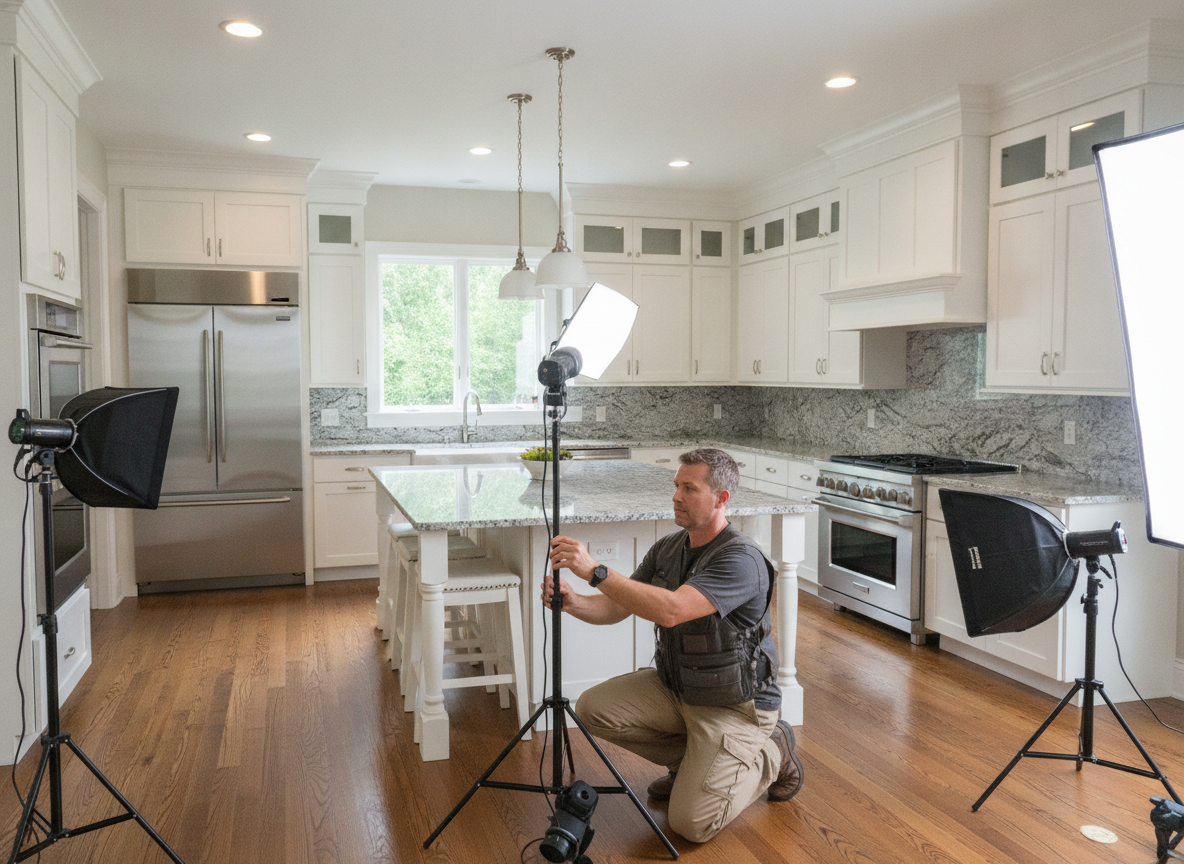
    realtor photographing kitchen bedroom bathroom

    Photo by Quixess Social

    Essential Angles and Compositions

    Each room requires at least one wide composition and one detail shot. Wide shots establish scale and flow; detail shots highlight finishes and upgrades that separate this home from competitors.

    Conclusion

    Professional listing photos are the foundation of modern real estate marketing, but their impact multiplies when sellers receive this preparation checklist 48-72 hours before the photo shoot. Well-prepared homes photograph in 2-3 hours instead of 4+, saving time and money while delivering superior results. Once photos are captured, AI-powered tools maximize their value across video, social, and print, turning one shoot into months of marketing content. Send this checklist to your next listing and watch how preparation transforms the entire marketing timeline.

  • How to Write a Monthly Market Update Your Clients Actually Read

    How to Write a Monthly Market Update Your Clients Actually Read

    Market updates should be one of an agent’s strongest tools. They show expertise, give past clients a reason to hear from you, and answer the question everyone asks at every barbecue: “So how is the market?”

    The problem is that most updates are tables of statistics with no explanation. Readers skim the first line and move on. Here is a format that people actually finish.

    Pick the three numbers that matter

    You could report twenty metrics. Your readers only need a few. For most local audiences, these three tell the story:

    • Median sale price, and how it compares with last month and last year
    • Days on market, which shows how quickly homes are selling
    • Inventory or months of supply, which shows whether buyers or sellers have the edge

    Always pull numbers from a reliable source such as your local MLS or board of Realtors, name the source, and note the date range the data covers.

    Translate numbers into meaning

    A number without context is just trivia. After every statistic, add a sentence that explains what it means for real people. For example, instead of only writing that days on market rose from 18 to 26, add: “Homes are taking a little longer to sell, which gives buyers more time to decide and more room to negotiate.”

    Speak to buyers and sellers separately

    Close with two short sections:

    1. If you are buying: what the current conditions mean for offers, timing, and negotiation
    2. If you are selling: what they mean for pricing, preparation, and expectations

    This small step makes the update feel personal, even when it goes to your whole list.

    Keep it short and consistent

    Aim for a piece someone can read in two or three minutes. Publish around the same time every month so readers learn to expect it. Consistency builds more trust than any single brilliant update.

    Go hyperlocal when you can

    County-wide numbers are useful, but a neighborhood or zip code update is far more interesting to the people who live there. If you farm a specific area, give it its own update.

    Share it everywhere

    Publish the full update on your blog so it can be found in search, then share pieces of it: a stat graphic for Instagram, a short video summary for Reels, a quick post for Facebook, and a note in your email newsletter.

    Make it a monthly habit

    QuixAgents includes a market update template that fills in your location and the current month, drafts the explanation around your numbers, and publishes to WordPress. From there, you can turn the highlights into social posts and schedule them across your channels.

    A clear, honest market update every month is one of the simplest ways to become the agent people think of first.