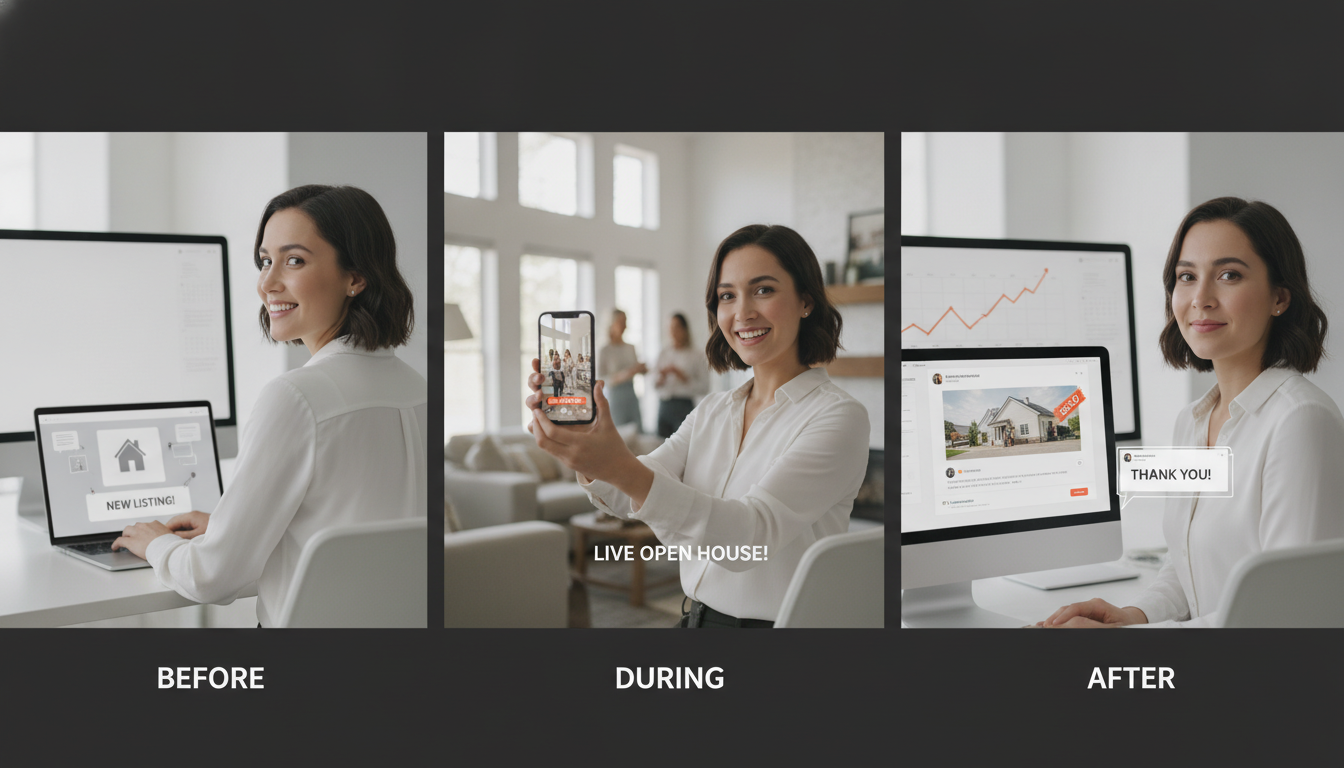
Open House Marketing on Social Media: Before, During, and After with AI-Powered Real Estate Marketing
For additional depth on visual storytelling, review your shot list for creating listing videos that stop the scroll, which covers the specific angles and transitions that maximize viewer engagement across platforms.
Before the Open House: Building Anticipation and Targeting Your Audience
Targeting Your Local Audience
Segmentation separates an effective campaign from an ineffective one. Use automated social media scheduling tools to segment your audience by geography (targeting a 2-3 mile radius around the property), buyer intent (users who’ve engaged with similar-priced homes), and platform behavior. A 35-year-old family on Facebook needs different messaging than a first-time buyer on TikTok. Geographic targeting ensures your budget reaches people capable of attending. Test different creative angles, one version emphasizing the renovated kitchen, another highlighting proximity to top schools, and let your scheduling tool distribute them strategically across segments.
During the Open House: Real-Time Engagement and Social Proof
Live Content and Behind-the-Scenes Moments
The open house itself is your most powerful content-creation opportunity. Post Stories or short-form videos from inside the property to create urgency and FOMO among followers who haven’t visited. A quick 10-second clip of the kitchen bathed in natural light or a visitor’s testimonial generates authentic social proof that static photos can’t match. Capture visitor reactions and crowd moments, a home full of interested buyers is far more persuasive than an empty living room. A caption like “The second this buyer saw the backyard, we knew this home was special” resonates more than reciting property specifications.
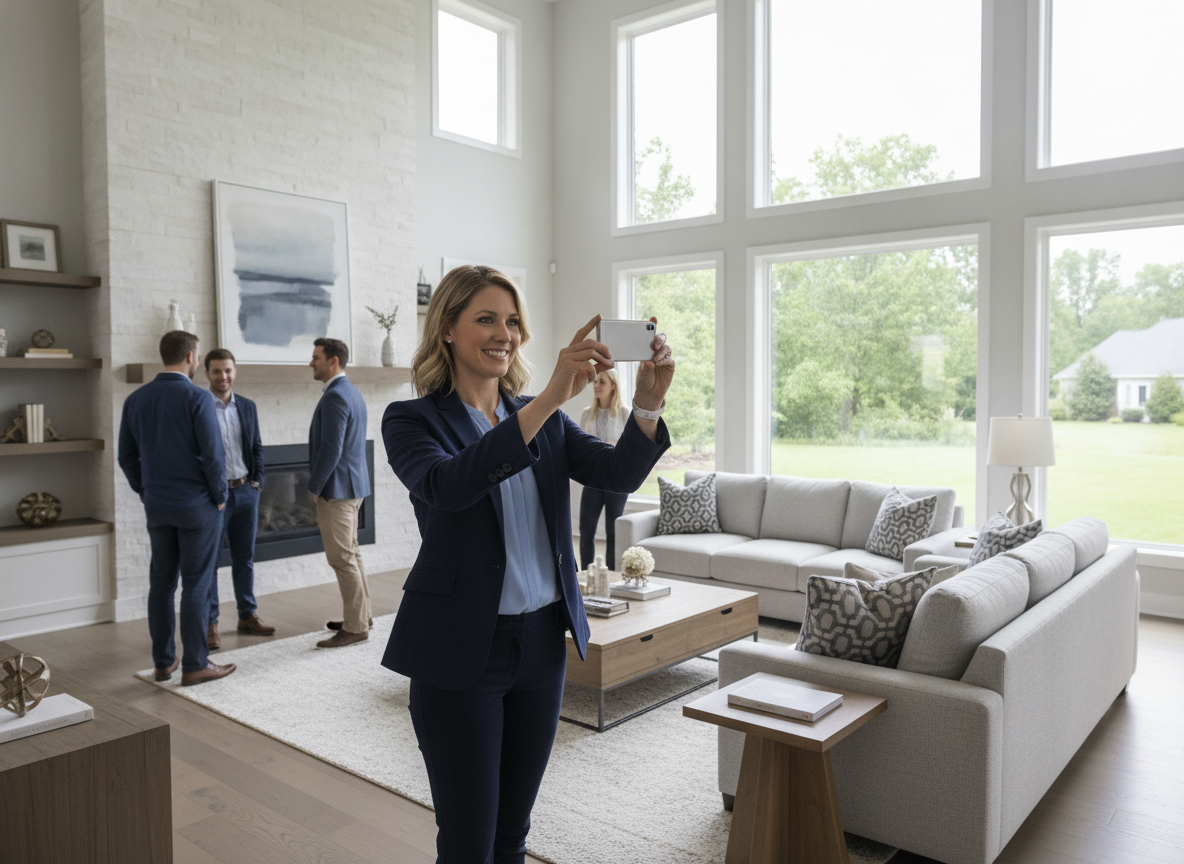
Photo by Quixess Social
User-Generated Content and Consistent Multi-Platform Posting
Encourage visitors to tag themselves in Stories or share photos using a branded hashtag like #OpenHouse[PropertyAddress]. User-generated content signals authenticity and builds trust. Batch-create Stories, feed posts, and Reels before the event, then queue them for strategic release across Instagram, Facebook, TikTok, and YouTube at 2-3 post intervals during a 2-3 hour open house. This keeps you present with visitors instead of managing your phone.
Post-Open House: Converting Interest Into Leads and Local Authority
The 48-Hour Conversion Window
Research shows engagement and purchase intent spike within 48 hours after an event as visitors process what they saw. Publish a thank-you post featuring the best moments and visitor reactions, tagging attendees with a clear call-to-action: “Interested in scheduling a private showing? Message us or click the link in bio.” Create a dedicated landing page or scheduling link promoted exclusively during this window. QuixAgents and similar platforms automate email follow-up sequences, ensuring every form submission receives immediate acknowledgment without manual intervention.

Repurposing Open House Content for Ongoing Authority
One open house generates content that works for weeks. Extract testimonial quotes and create graphic posts highlighting specific features. Turn behind-the-scenes clips into longer-form YouTube recaps or Instagram carousel series. If you captured visitor reactions to outdoor space, use that content in posts about “outdoor living trends in [neighborhood].” Develop neighborhood guides tied directly to the property’s location, highlighting schools, restaurants, and community events within 2-3 miles. This content builds local SEO authority for your business. Reference our detailed resource on writing neighborhood guides that rank on Google.
Lead Nurturing and Audience Segmentation
Segment your post-open house audience into serious buyers (attendees who left contact info), interested prospects (followers who engaged but didn’t attend), and community members (local followers building neighborhood interest). Serious buyers receive priority follow-up and property-specific information. Interested prospects get neighborhood content and market updates. Community members benefit from local authority content. Maintain segmented communication for 30-60 days post-event, as visitors who didn’t purchase may refer friends or gain clarity later.
Measuring Impact
Track metrics throughout and after the open house: social reach, engagement rate, click-through rate to your scheduling link, attendees from social media, and leads generated within 7 and 30 days. Cross-reference which content types and posting times generated the most engagement. Did short-form video outperform carousels? Did Stories drive more foot traffic than feed posts? Compare results to past open houses to validate your strategy. For additional frameworks, explore the just listed playbook approach, which outlines seven days of strategic content.
Automating the Entire Workflow: Tools That Save Time Without Sacrificing Quality
Why Manual Social Media Management Fails for Open Houses
A comprehensive one-week campaign requires posting 12-15 unique assets across Instagram, Facebook, TikTok, and Nextdoor. Add real-time engagement during the showing, and agents sacrifice client interactions to chase posting schedules. Research shows agents spending more than 8 hours per week on manual content creation see measurable decline in conversion rates due to reduced quality in personalized follow-up with actual leads.
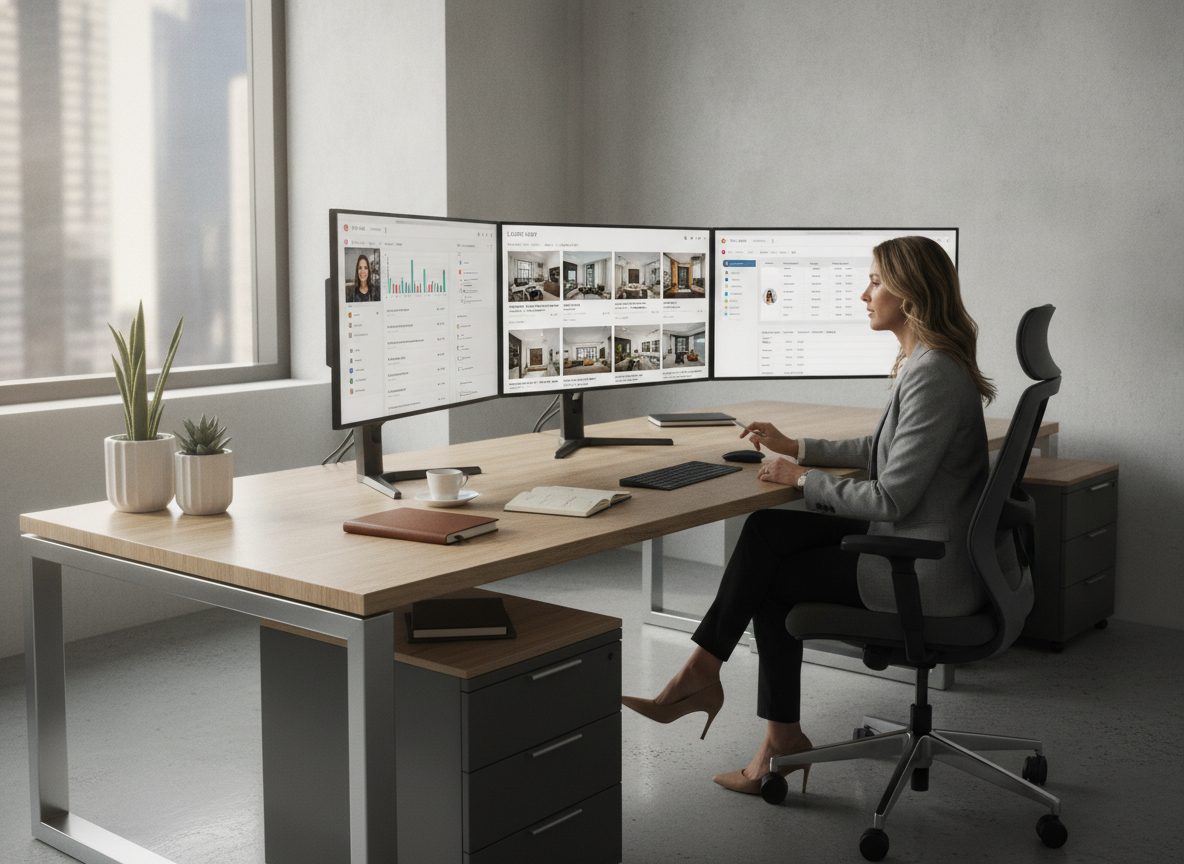
Photo by Quixess Social
How AI-Powered Tools Streamline Multi-Platform Promotion
QuixAgents and similar AI-powered real estate marketing platforms transform open house campaigns from scattered manual efforts into orchestrated multi-channel promotions. These tools convert listing photos into professional videos, generate location-specific SEO blog posts, and schedule 8-12 weeks of social media content across platforms from a single property input. They eliminate the need for external designers, videographers, or agencies, reducing campaign costs by 60-70% while improving consistency. Batch-creating content for multiple open houses saves 5-10 hours per week. Integration with existing CRM systems ensures prospect data flows seamlessly from social engagement to your database, creating an unbroken lead nurturing chain.
Conclusion
Open house success on social media demands a strategic three-phase approach: building anticipation before the event, driving real-time engagement during the showing, and converting interest into long-term lead flow afterward. Agents who treat each listing as a year-round content asset generate exponentially more value from every property they represent. Embracing AI-powered real estate marketing multiplies your expertise. When you free yourself from manual content creation, you reclaim hours for what drives success: closing deals, building relationships, and earning referrals.