Tag: buyer engagement

  • Instagram Carousels for Listings: A Slide-by-Slide Formula (Listing Marketing)

    Instagram Carousels for Listings: A Slide-by-Slide Formula (Listing Marketing)

    Instagram Carousels for Listings: A Slide-by-Slide Formula for AI-Powered Real Estate Marketing

    Carousel Performance Metrics That Matter

    Meta’s algorithm prioritizes carousel completion rates, the percentage of viewers who swipe through all slides. Real estate carousels regularly achieve 4-6% completion rates, compared to 1-2% for single-post images, translating to 4x more impressions for the same listing.

    Saves and shares are equally important. Carousels are shareable, allowing buyers to send them to partners without screenshots. Save rates for property carousels run 2-3 points higher than single posts, keeping your listing in potential buyers’ collections longer. The carousel format preserves all essential information on every slide, reducing friction for interested parties.

    The 7-Slide Blueprint: What Goes Where and Why

    Slide 1: The Hook, Exterior and Price

    Your first slide is a thumbnail and headline combined. Use your home’s best exterior angle, usually street-facing in good daylight, photographed at eye level or slightly elevated. Overlay the address, bed/bath count, and price in bold text in the lower third. Example: “1847 Oakmont Drive | 4 Bed, 3 Bath | $895,000.” This slide determines whether viewers swipe at all.
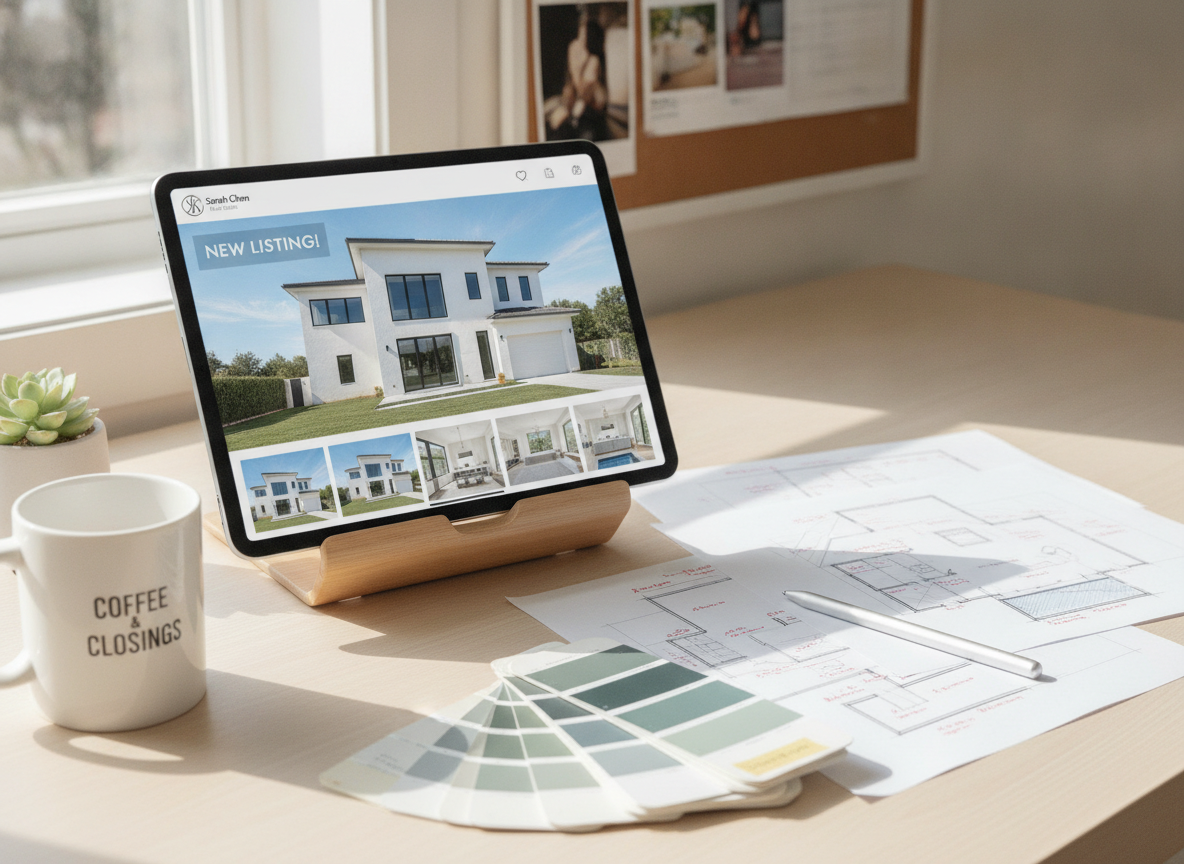
    real estate carousel slides layout

    Photo by Quixess Social

    Slides 2-5: Feature Storytelling

    Showcase your property’s key spaces in strategic order: kitchen (slide 2), primary suite (slide 3), living area (slide 4), and outdoor space (slide 5). Use benefit-focused copy that describes what happens in each space, not just its features. Instead of “Modern Kitchen,” use “Chef’s Kitchen: Island Prep Space & Stainless Appliances.” A kitchen slide showing the island from a corner angle that captures seating and cooking workspace tells a story of gathering and entertaining. Each slide answers: “What can I do here?” or “How does this space improve my life?”

    Slides 6-7: Urgency and Action

    Slide 6 introduces scarcity or urgency: “Just Listed, 5 Days on Market,” “Open House Saturday 2-4 PM,” or comparable sales data. This creates a reason to act now.

    Slide 7 is always the call-to-action. Use Instagram’s native CTA stickers if possible, with direct copy: “Schedule Your Showing,” “Text TOUR to 555-1234,” or “Visit [yourwebsite].com for Details.” Make this slide visually distinct so it stands out.

    Design Consistency and Brand Authority

    Building a Recognizable Visual System

    When buyers see multiple carousels in their feed, they should recognize your listings instantly. Choose a clean sans-serif font (like Montserrat or Open Sans) and stick with it. Select a primary brand color, your logo color works well, and use it for accents and overlays on every carousel. A semi-transparent overlay in that color, placed consistently, creates a branded frame signaling professionalism.

    smiling real estate agent

    Consistency in alignment and spacing matters too. If your address and bed/bath info sits in the lower third of slide 1, that same alignment should appear on every opening slide. This repetition builds familiarity and makes your listings feel professionally managed.

    Ensuring Consistency at Scale

    Maintaining this consistency while launching multiple carousels monthly becomes labor-intensive without proper systems. Automation platforms like QuixAgents allow you to create a carousel template with your brand colors, fonts, and structure, then batch-apply it to new listings. The platform generates overlay text automatically from MLS data and creates all seven slides in minutes rather than hours of manual work.

    Your copy tone should also reflect your brand voice consistently. Whether you position yourself as luxury or accessible, that voice should flow through every carousel caption and property description. This consistency establishes authority, buyers assume you bring the same professionalism to contracts and closing logistics.

    Automation Tools That Streamline Carousel Creation

    From Photos to Polished Carousel

    The bottleneck for most agents is execution. AI-powered platforms like QuixAgents recognize rooms automatically and generate carousel layouts from your listing photos in minutes. Kitchen photos become slide two; master bedrooms become slide three. MLS data integration populates price, address, beds, baths, and square footage automatically across every slide, eliminating tedious manual entry.
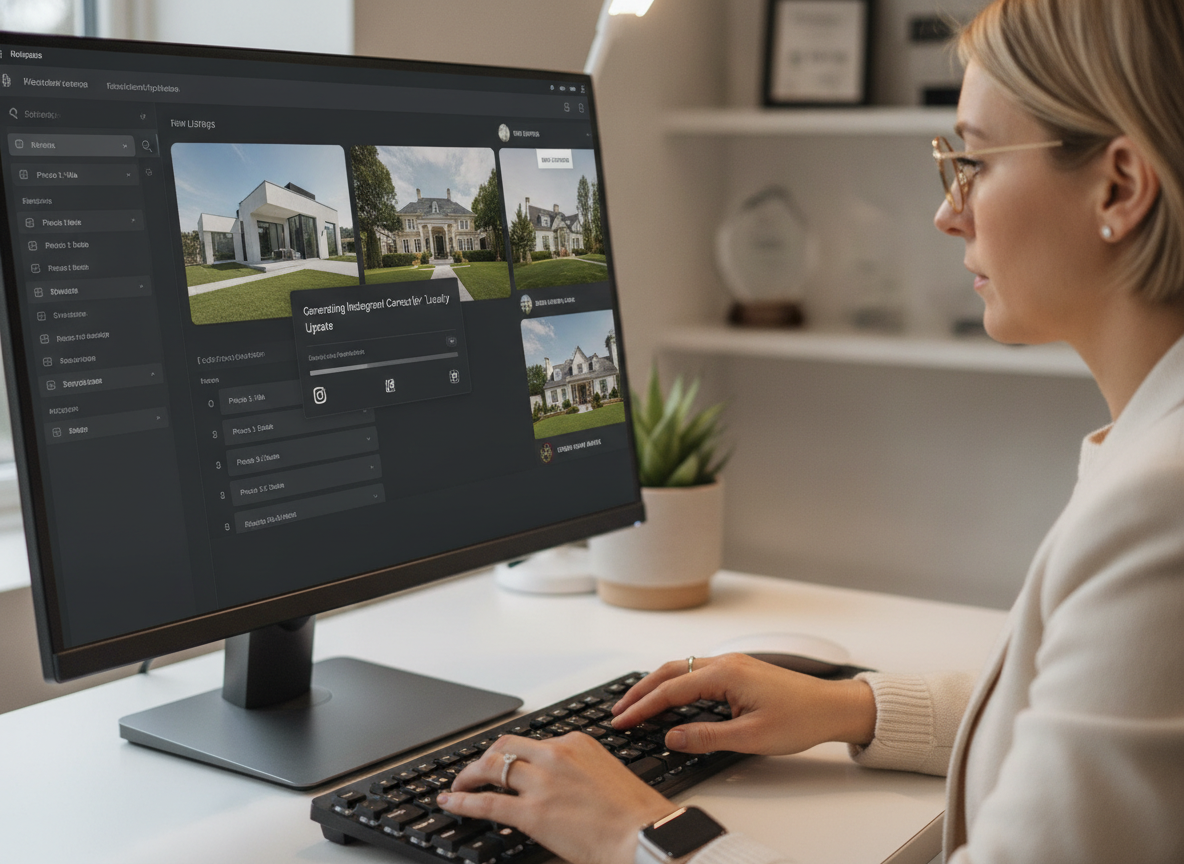
    real estate marketing software automation

    Photo by Quixess Social

    Scheduling software lets you plan carousel drops across weeks or months. Multi-channel scheduling, Instagram, Facebook, TikTok, and Pinterest simultaneously, ensures consistent visibility without daily effort. One upload reaches your entire audience.

    Conclusion

    Instagram carousels are table stakes for agents competing on social. The 7-slide blueprint gives every listing a consistent structure that works across all price points. Combined with design consistency and automation, carousels transform raw listing photos into a scalable marketing engine that builds your brand authority with every post.

    Automating carousel creation removes design bottlenecks, freeing you to focus on showings and closing deals. Test this formula on your next three listings, measure engagement, and adjust based on which slides get the most saves and shares. Your carousel performance will compound as your brand becomes recognizable across your market. For more on structuring your overall listing content strategy, see our guide on 7 days of content from one new listing.

  • Listing Photos That Sell: A Prep Checklist to Send Your Sellers (Listing Marketing)

    Listing Photos That Sell: A Prep Checklist to Send Your Sellers (Listing Marketing)

    Listing Photos That Sell: A Prep Checklist to Send Your Sellers (AI-Powered Real Estate Marketing)

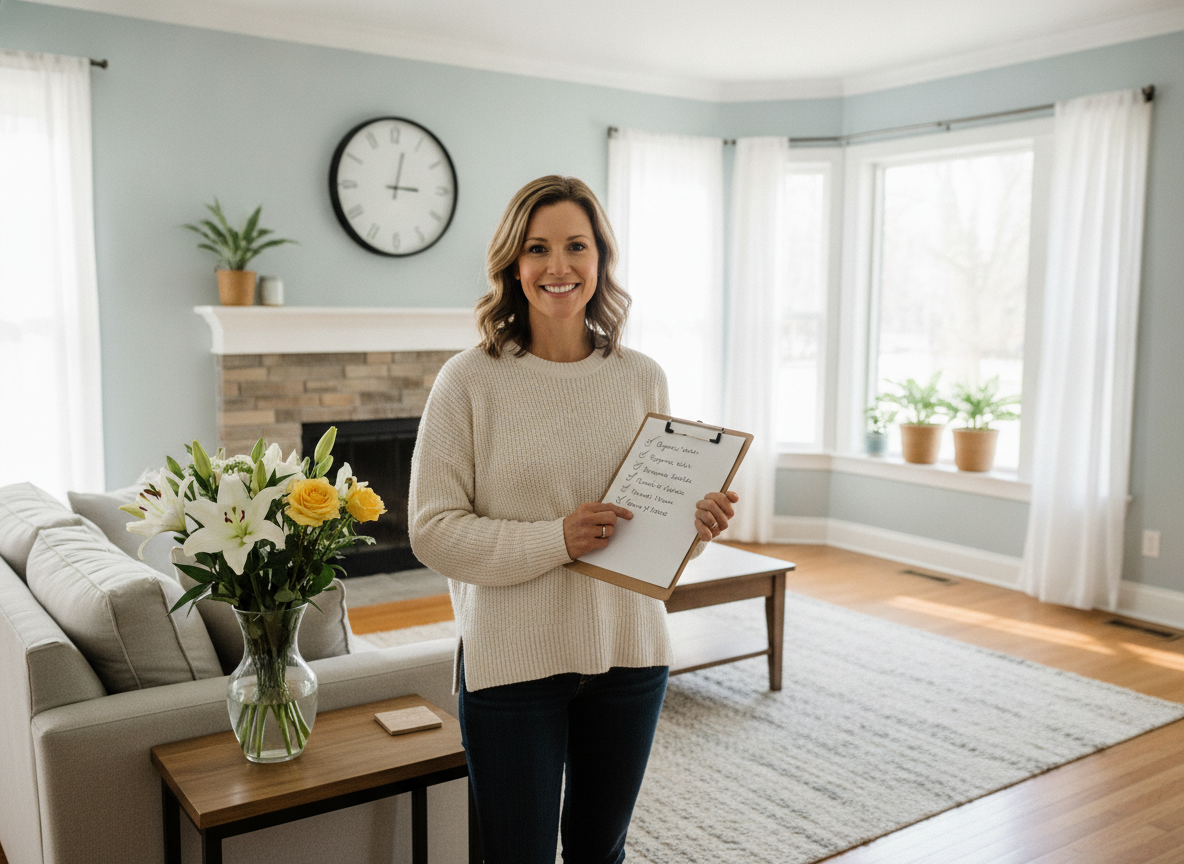
    Listing photos are the first impression, and often the only impression, they make on buyers. Homes with weak photography languish on listing sites while professionally presented properties attract serious inquiries within days. A solid pre-shoot checklist ensures photos convert browsers into showings by presenting homes in their best light.

    Why Photo Quality Directly Impacts Your Listing’s Sales Cycle

    The Psychology of First Impression in Online Home Search

    Buyers spend an average of 6-8 seconds per photo when scrolling through listings online. Research shows that homes with high-quality professional photos receive 70% more inquiries than those with amateur snapshots, directly translating to more showings and faster sales. Photo quality sends a psychological signal to buyers about the property itself. Clear, well-lit photos communicate that the seller has maintained the home and cares about presentation, while dark, poorly composed images suggest neglect or hidden problems.

    How Professional Photos Reduce Time on Market

    Listings with professional photography spend significantly less time on the market. Properties with high-quality images generate more qualified leads, resulting in faster offer timelines and reduced carrying costs for sellers.

    The Pre-Shoot Preparation Checklist Your Sellers Need

    Decluttering and Depersonalization Essentials

    Before the photographer arrives, sellers need to dramatically reduce visual noise in every room. The goal is simple: help buyers envision themselves in the space rather than seeing the current occupants’ lives. Remove roughly 50% of visible personal items, family photos, children’s artwork, and memorabilia. Clear kitchen counters down to just 3-5 essential items maximum. Empty nightstands except for a single lamp. Remove kitchen magnets, post-it notes, and family calendars.

    home preparation cleaning staging

    Photo by Quixess Social

    Wall colors also deserve attention. Bold accent walls and dramatic finishes distract from the home’s architectural bones. Neutral, light-filled rooms photograph better than bold, personalized spaces.

    Lighting and Cleaning Priorities

    A clean home looks dramatically better under proper light. Have sellers prioritize deep cleaning before shoot day: baseboards, window tracks, light fixtures, and ceiling corners. Grime on windows reduces the impact of natural light. Instruct sellers to open all blinds and curtains to maximize natural light and turn on interior lights for balanced exposure. Ensure all bulbs function and use consistent warm white color temperatures. Key tasks: clean windows inside and out, wipe light switches and door handles, scrub bathroom fixtures, clean mirrors and glass, vacuum or mop every floor, and dust crown molding.

    Staging for Camera Appeal

    Remove excess furniture that makes rooms feel cramped. Bedrooms benefit from a made bed with neutral bedding and minimal pillows, appearing open enough for buyers to imagine their own furniture arrangement. Entryways should be clean and welcoming. Living rooms should show conversation-friendly furniture arrangements without feeling small. Kitchen islands or dining tables should be nearly empty. Ensure all doors open fully and aren’t blocked by furniture.

    Real Estate Video Creation Tools: Beyond Static Photos

    Why Video Expands Reach on Social Channels

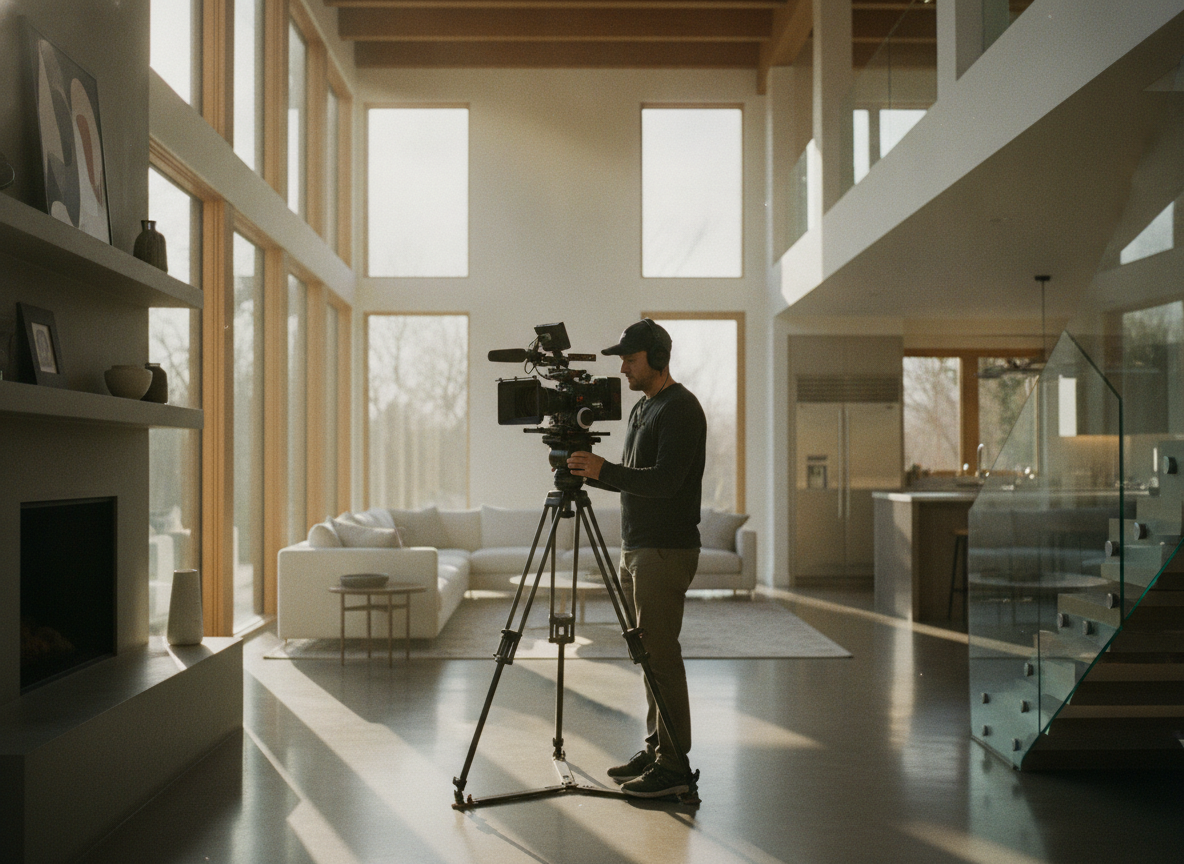
    Video content generates 10x more engagement than photos on Instagram Reels, TikTok, and YouTube Shorts, platforms where today’s home shoppers spend significant time. A 15-30 second walkthrough video stops scrollers and compels them to watch, share, and ask questions. Real estate agents who prioritize video report higher click-through rates, increased showing requests, and faster time-on-market.

    professional video camera rig

    Turning Prepared Photos Into Multi-Format Content

    Modern real estate video creation tools, including QuixAgents, automatically detect rooms, add captions, music, and subtle motion to static images, creating polished walkthrough videos without requiring additional shoot time. The platform transforms a 20-photo shoot into vertical-format Reels, horizontal YouTube content, and social media announcements, maximizing the home’s appeal across all marketing channels.

    Room-by-Room Photo Shot List for Maximum Impact

    Priority Rooms That Sell Homes

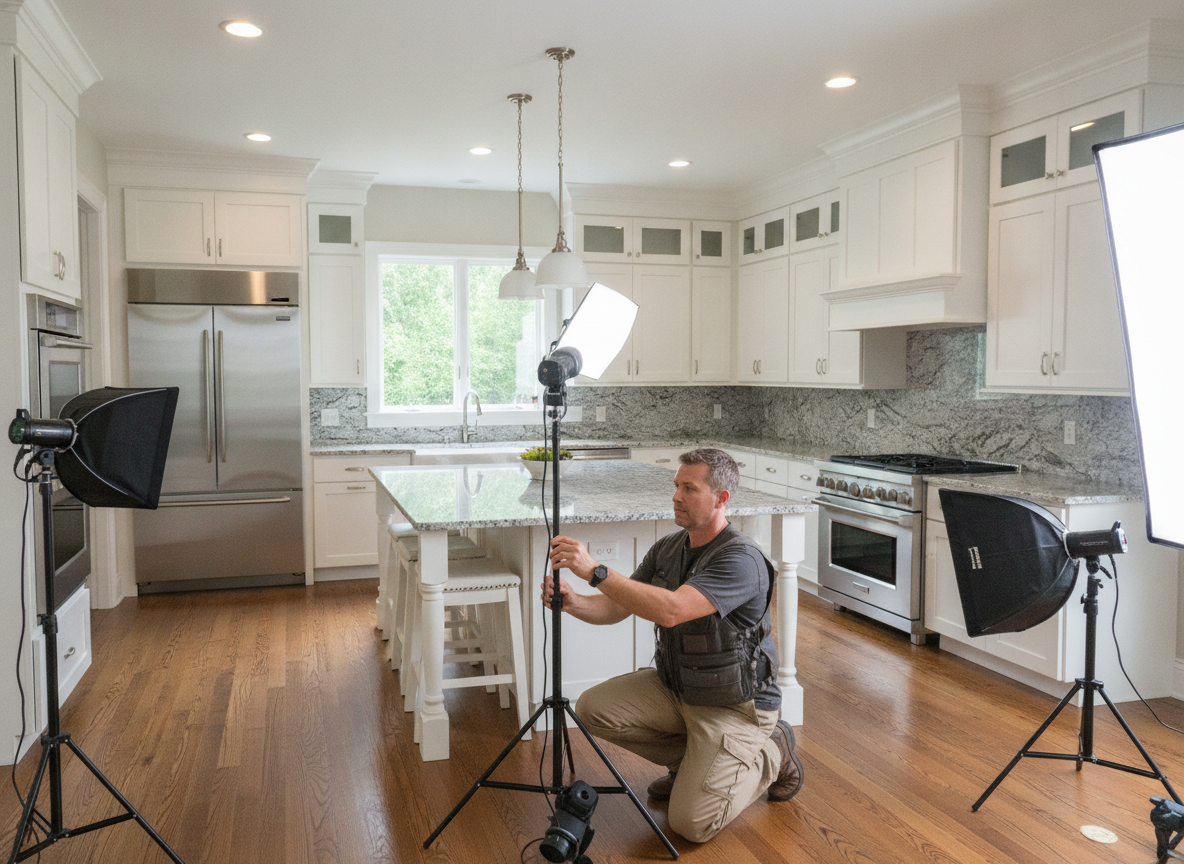
    The kitchen demands the widest attention: capture the full kitchen in one composition, then photograph countertops and appliances individually, and secure a view from the dining area. The primary bedroom requires a wide shot showing bed placement and room scale, a close-up of the ensuite bathroom, and images highlighting windows. Bathrooms should show fixtures in wide-angle compositions and detail shots of updated tile or hardware. Living spaces benefit from corner shots revealing full dimensions, fireplace details if present, and clear views of natural light sources. Capture the exterior and entry with daytime photos of the home front with landscaping, driveway, and outdoor spaces.

    realtor photographing kitchen bedroom bathroom

    Photo by Quixess Social

    Essential Angles and Compositions

    Each room requires at least one wide composition and one detail shot. Wide shots establish scale and flow; detail shots highlight finishes and upgrades that separate this home from competitors.

    Conclusion

    Professional listing photos are the foundation of modern real estate marketing, but their impact multiplies when sellers receive this preparation checklist 48-72 hours before the photo shoot. Well-prepared homes photograph in 2-3 hours instead of 4+, saving time and money while delivering superior results. Once photos are captured, AI-powered tools maximize their value across video, social, and print, turning one shoot into months of marketing content. Send this checklist to your next listing and watch how preparation transforms the entire marketing timeline.

  • How to Write a Listing Description Buyers Actually Finish (Listing Marketing)

    How to Write a Listing Description Buyers Actually Finish (Listing Marketing)

    How to Write a Listing Description Buyers Actually Finish: AI-Powered Real Estate Marketing Guide

    Most listing descriptions are skimmed, not read. Buyers scroll past generic features in seconds, looking for something that speaks to how they’ll actually live in the space. A well-written listing description captures attention in the first two sentences and converts curious browsers into showing requests. In this guide, you’ll discover why listing descriptions fail, the framework that keeps buyers engaged, and the tactics that separate high-performing listings from the pack.

    Why Listing Descriptions Fail (And What Buyers Actually Want)

    The Problem: Feature Dumps Instead of Stories

    Walk through the average MLS listing and you’ll see the same tired language: “beautiful,” “stunning,” “charming,” “move-in ready.” These adjectives trigger nothing. According to 2025 real estate consumer behavior data, 73% of online home searchers begin their decision-making process with lifestyle fit, not property features. Buyers want to see themselves in the space before they care about granite counters.

    On mobile devices, where over 70% of listing traffic originates, feature-heavy descriptions become walls of text. The result: incomplete reads, quick exits, and fewer showing requests.

    What Stops the Scroll: Specificity Over Generic Praise

    Descriptions that win pair concrete details with lifestyle language. Instead of “beautiful kitchen,” try “Morning light floods the kitchen from the east-facing window over the sink, perfect for coffee before work.” The first 50 words determine whether a buyer reads the rest. When you paint a detailed picture, buyers finish reading.

    The Framework: Structure That Keeps Buyers Reading

    Open With the Moment, Not the Square Footage

    The opening paragraph should anchor the reader in a lived experience. Consider the difference:

    real estate listing description writing

    Photo by Quixess Social

    • Weak: “Stunning 4-bed, 2-bath home on quiet street. Updated kitchen. Hardwood floors throughout.”
    • Strong: “Imagine Sunday mornings on the back patio with coffee, watching the birds at the feeder you’ll hang from the century oak. This 4-bed, 2-bath sits on a quiet, tree-lined street where families actually know their neighbors.”

    The second version weaves specs into an emotional hook. Buyers who see themselves in that scene keep reading.

    Layer Details Strategically

    Once you’ve established the lifestyle moment, group related features together. Organize information into clear zones:

    • Kitchen and dining: Natural light, counter space, appliances, flow into dining area
    • Primary suite: Bed size potential, ensuite features, closet layout
    • Additional bedrooms: Size, light, storage, potential uses
    • Outdoor space: Deck/patio size, landscaping, entertaining potential

    Keep paragraphs to 2-3 sentences maximum. Short, digestible paragraphs increase the chance that buyers finish the description and request a showing.

    Close With the Next Step

    The final paragraph should invite action without sounding pushy. End with a subtle call-to-action: “Schedule a private showing to walk through the primary suite,” or “Virtual tour available, link in agent comments.” Descriptions using “you” language, “You’ll love the chef’s kitchen,” “You can see the sunrise from the master bedroom”, consistently outperform neutral descriptions. This shift from observer to resident is where conversion happens.

    The Tactics: What to Write and What to Cut

    Lead With Lifestyle and Location Context

    Buyers don’t want to know what a space is. They want to know what they’ll do there. Instead of “updated kitchen,” describe a “kitchen with island seating for morning coffee and entertaining.” Location context works the same way: “Three-block walk to the farmers market, craft coffee roasters, and the elementary school” beats “walkable neighborhood.” Specific details help buyers envision their actual life in the home.

    smiling real estate agent

    Be Specific About What Makes This Home Different

    Every home has something unique. “Original hardwood floors” is generic; “1970s hardwood flooring under carpet in the master bedroom” is specific enough that buyers want to see it in person. Numbers, dates, and concrete details create credibility and differentiate your listing from dozens of others buyers scroll through daily.

    Avoid the Words That Kill Engagement

    Superlatives like “gorgeous,” “amazing,” and “stunning” appear in nearly every listing, meaning they register as noise to buyers. Unless you can back a superlative with a specific reason, cut it. The same applies to weasel words: “cozy” typically means small, “charming” often signals old, and “quaint” rarely adds value without context.

    The Workflow: Scaling Descriptions Without Burnout

    Start With Photos, Not a Blank Page

    The best listing descriptions emerge from visualizing a property before typing. Scroll through the listing images and note which rooms deserve emphasis, which views matter most, and which details deserve mention. This method ensures your description complements your visuals rather than repeating them.

    real estate team collaboration workflow

    Photo by Quixess Social

    Use Templates to Build Consistency

    Templates save hours without sacrificing quality. Develop separate frameworks for suburban homes, urban lofts, and luxury properties. Each template should include sections for location context, primary bedroom narrative, kitchen and bath specifics, and lifestyle benefits. Review descriptions on mobile before publishing, dense paragraphs feel overwhelming on small screens, so break text into shorter sections with white space.

    Conclusion

    Listing descriptions that buyers actually finish combine emotional narrative with concrete specificity, delivered in a mobile-friendly format. The difference between a description that converts and one that doesn’t often comes down to the first sentence and the ruthless removal of weak adjectives. By leading with lifestyle, cutting weasel words, and grounding every claim in specific details, agents create copy that moves buyers from browsing to scheduling showings.

  • Coming Soon Campaigns: How to Build Buzz Before a Home Hits the Market (Listing Marketing)

    Coming Soon Campaigns: How to Build Buzz Before a Home Hits the Market (Listing Marketing)

    Coming Soon Campaigns: How to Build Buzz Before a Home Hits the Market

    The pre-listing phase is when most agents lose critical marketing momentum. Coming soon campaigns create anticipation, build exclusivity, and capture high-intent buyers before your listing officially hits the market. This guide reveals strategies top-producing agents use to generate buyer inquiries from day one.

    Why Coming Soon Marketing Matters More Than Ever

    The window before ‘active’ is your competitive advantage

    The coming soon phase creates scarcity and exclusivity. Buyers who discover a property before official launch feel they’ve found an insider opportunity, translating emotional advantage into faster engagement. Research from the National Association of Realtors indicates that 73% of today’s buyers begin their search online.

    How early visibility affects final sale price

    Agents who invest in coming soon campaigns report 10-15% faster closing timelines compared to those who wait until active listing day. A property attracting 15 qualified buyers in the pre-listing phase enters active status with documented demand, strengthening your negotiating position.

    Video Content Strategy for Coming Soon Listings

    Turning pre-listing photos into scroll-stopping previews

    Video dominates real estate content. Instagram Reels, TikTok, and YouTube Shorts account for over 60% of real estate content consumption among buyers. Convert existing pre-listing photos into dynamic video teasers that capture attention within two seconds.

    real estate video production camera

    Photo by Quixess Social

    Focus on teaser content rather than full reveals. A 15-second clip highlighting architectural details, premium finishes, or neighborhood walkability outperforms longer walkthroughs. Partial reveals drive higher engagement because viewers must engage further to see the complete picture.

    Where to distribute coming soon video clips

    Success depends on multi-platform distribution with platform-specific optimization. Adapt a single vertical video for Instagram Reels, Facebook Reels, TikTok, YouTube Shorts, and LinkedIn. Each platform favors different patterns: Instagram rewards consistent posting within 6-hour windows, TikTok prioritizes trending sounds and hashtags, and YouTube Shorts benefit from 15-60 second durations with text overlays.

    QuixAgents enables agents to automate multi-platform distribution through scheduled posting that maintains optimal timing across channels.

    Timing and frequency that builds anticipation

    Coming soon campaigns perform best on a 3-5 post-per-week cadence. Tuesday-Thursday evenings at 6-8 PM typically generate highest engagement. Countdown elements amplify anticipation with text overlays like “Coming This Friday.” Layer multiple content types, architectural detail videos one day, neighborhood features another, seller-favorite room reveals on a third, rather than repeating the same property from different angles.

    Content Formats That Generate Buyer Inquiries Before Day One

    Neighborhood spotlights that position the property within market context

    Position coming soon listings within a compelling neighborhood narrative. Create content answering “What’s it really like to live here?” with posts about local amenities, school district performance, walkability scores, and lifestyle factors aligned with your target buyer persona.

    smiling real estate agent

    These spotlights work best as SEO-optimized blog posts. A post titled “Where Young Families Are Moving in [Neighborhood]: 2026 Market Insights” naturally incorporates the coming soon property into broader community story while ranking for high-intent searches.

    Market data posts that attract serious buyers

    Data-driven content filters for serious buyers. Include market updates addressing buyer concerns: inventory levels, price trends, days-on-market benchmarks, and comparative analysis. According to the National Association of Realtors, 72% of buyers research neighborhood market conditions before contacting an agent. Posts answering “How competitive is this market?” or “What are homes actually selling for in this area?” attract ready-to-buy searchers with concrete data: median sale prices from the last 90 days, average days-on-market for similar properties, inventory trends, and price-per-square-foot comparisons.

    AI-Powered Real Estate Marketing: Scaling Coming Soon Campaigns Without Manual Work

    Automating the coming soon content calendar

    QuixAgents allows agents to upload listing photos once and generate videos, graphics, blog posts, and social-ready content in minutes. The platform uses AI to recognize room types, generate SEO-optimized captions, and create format-specific variations. A coming soon campaign requiring 8-12 hours of manual work now takes 90 minutes from photo upload to multi-channel publishing.

    real estate agent computer analytics

    Photo by Quixess Social

    Finding and reaching buyers before they contact competitors

    65% of home searches now begin on social platforms rather than traditional real estate sites. AI-powered monitoring identifies buyer signals in local communities: Nextdoor conversations about relocations, Facebook group questions about school districts, Reddit threads about moving to specific areas. A prospect asking “Where should we move for a good school district?” becomes a warm lead for the coming soon property in that exact district.

    Repurposing one listing into multiple campaign assets

    One listing generates a coming soon video, property blog post, neighborhood guide, market update, daily social posts across platforms, email newsletters, and community announcements from the same photos and information. A video is sliced into short-form clips for TikTok and Reels. Property highlights become social graphics. Neighborhood research becomes blog content. Market data becomes email snippets. Agents publish 40-50 pieces of content during a two-week coming soon phase without creating individual assets, reclaiming 5-10 hours per week.

    Conclusion

    Coming soon campaigns are essential in today’s competitive real estate market. The weeks before a property officially launches are the most valuable marketing window available. Success requires consistent, multi-format content across video, blog, and social channels paired with strategic timing that reaches ready-to-move buyers before competitors. Agents leveraging AI-powered tools to automate video creation, SEO blogging, and social scheduling win more listings, generate pre-listing offers, and close faster.